
A 4 g fosfomycin vial is not automatically equivalent to every other fosfomycin product: the salt, active-moiety declaration, route, sodium load, and approved indication determine how it can be used. By the end, clinic buyers will be able to compare Fospro injection with fosfomycin EDTA and oral products, assess preparation and patient-monitoring demands, and request the documents needed for a safe purchase.
Key takeaways
- Confirm the active salt, route, labelled active moiety and indication before comparing products.
- Calculate sodium exposure from the product label, not the vial’s total gram strength.
- Adjust selection and monitoring to renal function, infection site and stewardship policy.
- Request batch, licence, stability, storage and preparation documents before ordering.
What exactly are you comparing: fosfomycin sodium, fosfomycin EDTA, or an oral product?
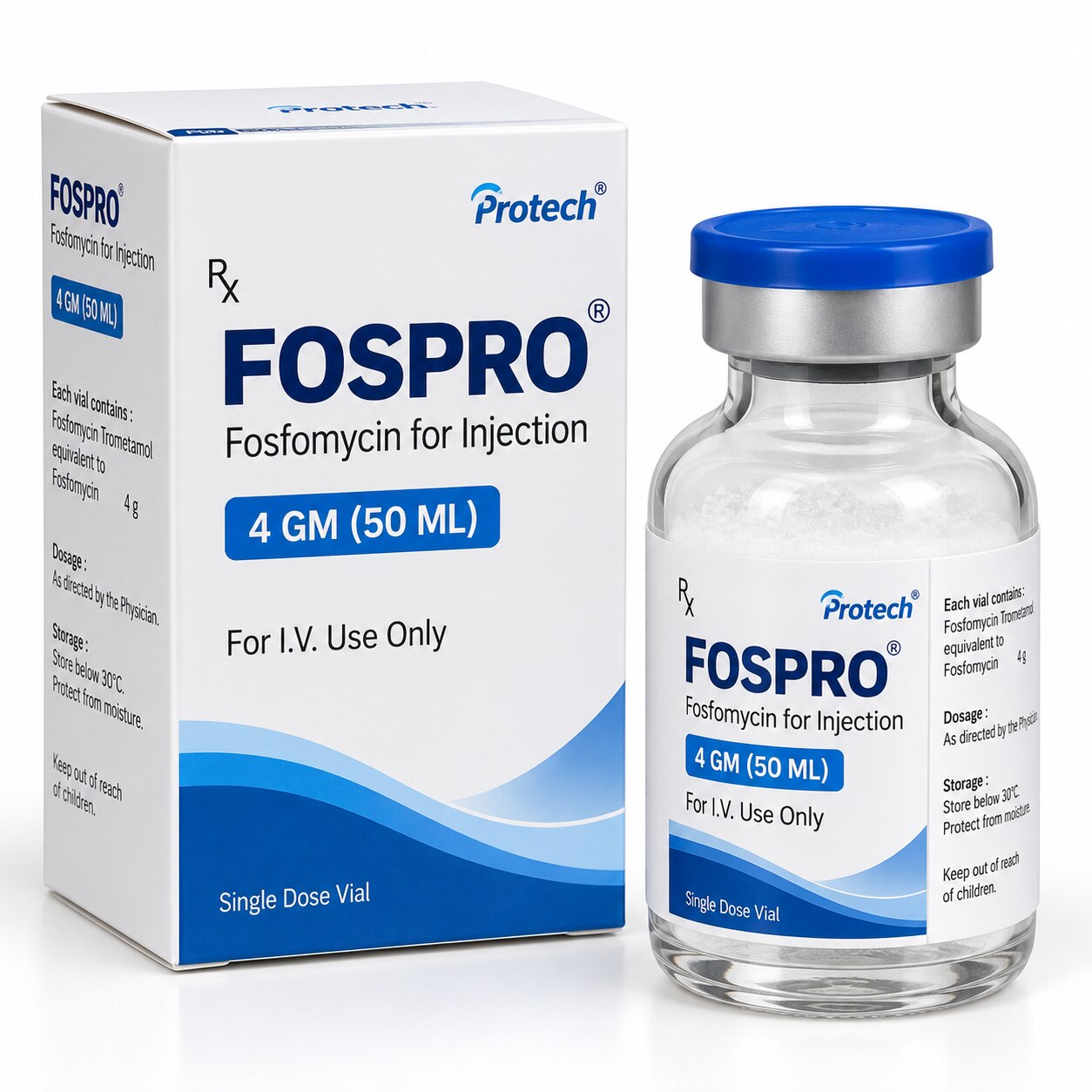
A 4 g vial does not make every fosfomycin product interchangeable. In a fospro injection comparison for clinics, verify the active salt, dosage form, route, labelled active moiety, approved indications, and intended clinical role before comparing price or dose.
| Option | Formulation and route | Clinical role |
|---|---|---|
| Fospro injection | Fosfomycin disodium, 4 g injectable presentation; intravenous route | Injectable treatment where the approved indication and prescriber’s assessment support systemic use |
| Fosfores | Fosfomycin EDTA injection; injectable route | A different formulation requiring its own dose, preparation instructions, indications, and compatibility checks |
| Oral fosfomycin | Fosfomycin trometamol, usually a single 3 g oral dose | Mainly acute uncomplicated cystitis in women; not a substitute for intravenous treatment of bacteraemia, pneumonia, osteomyelitis, or other systemic infections |
Read the package insert to see whether the label states fosfomycin sodium, fosfomycin equivalent, or the quantity of another compound. Treat “4 g” as the declared fosfomycin dose only when the insert defines it that way; do not assume it means 4 g of the entire salt or vial contents.
Oral trometamol produces high urinary concentrations but limited systemic exposure.
Before treating two nominally similar products as equivalent, compare the approved indication, dose unit, reconstitution fluid and volume, final concentration, infusion time, in-use stability, storage conditions, and line compatibility. That insert is the controlling document for selecting fosfomycin injection for clinics.
What do dose, sodium load, and preparation mean at the bedside?
A fosfomycin 4gm injection comparison starts with the prescribed daily amount, not the vial size. Adult intravenous regimens commonly use 12–24 g daily, divided into two or three administrations; severe infections may require the upper end. The approved product information and renal function determine the schedule.
Do not assume one 4 g vial is a complete daily dose.
| Item | One 4 g dose | What the clinic must determine |
|---|---|---|
| Fosfomycin amount | 4 g of declared fosfomycin | Total daily dose and number of administrations |
| Sodium contribution | About 1.28 g, or roughly 56 mmol | Sodium and fluid risk in renal impairment, oedema, or heart failure |
| Administration | One scheduled dose | Renal-adjusted regimen and infusion instructions |
Fospro injection preparation requires staff to verify every item in the approved insert because products differ:
- Permitted reconstitution fluid, diluent volume, and final concentration
- Infusion duration and line compatibility
- In-use stability, storage temperature, and maximum time before administration
- Aseptic technique and single-use vial handling
- Labelled storage after reconstitution
- Lot number and preparation time recorded in the medication record
Prepare each dose aseptically, discard unused vial contents, and never extend the stated administration window. Record the product, dose, diluent, final concentration, lot number, preparation time, storage condition, and administration time before the infusion begins.
How should renal function and antimicrobial stewardship shape the choice?
A standard 4 g presentation becomes clinically inappropriate when creatinine clearance, not serum creatinine alone, indicates reduced renal elimination. Fosfomycin is cleared mainly unchanged by the kidneys, so follow the registered renal-adjustment schedule; haemodialysis or another renal replacement therapy requires a product-specific protocol.
For fosfomycin injection for clinics, assess baseline and repeat creatinine, sodium, potassium, fluid balance, oedema, and heart-failure status. High-dose intravenous therapy can cause hypokalaemia and sodium or fluid loading; a fosfomycin 4gm injection comparison that ignores monitoring can underestimate the completed-course cost.
- Obtain cultures and susceptibility results before treatment when this will not delay urgent therapy.
- Label treatment as empiric or targeted, then review it after microbiology results arrive.
- Use combination therapy for serious multidrug-resistant infections when indicated; resistance can emerge during treatment.
- Select any companion drug by organism, infection site, susceptibility, and local antimicrobial-resistance guidance.
- Replace fosfomycin with a narrower effective antibiotic when one is suitable.
- Calculate cost from the prescribed daily dose, administration frequency, renal-dose wastage, diluents, supplies, electrolyte monitoring, susceptibility testing, and companion antibiotics—not vial price alone.
A standard regimen is not automatically one 4 g vial daily. Divided dosing and renal adjustment can increase administration work, wastage, and monitoring costs, making the lowest-priced vial the more expensive operational choice.
When is another injectable antibiotic a better comparator than fosfomycin?
Vial strength does not determine therapeutic interchangeability. A fospro injection comparison for clinics should match the infection, organism, site, resistance mechanism, tissue penetration, toxicity risk, and monitoring burden—not simply compare 4 g with another vial size.
| Option | Distinguishing role | Key limitation or monitoring |
|---|---|---|
| Cefoperazone/sulbactam | Beta-lactam plus beta-lactamase inhibitor for susceptible Gram-negative and mixed infections | Confirm local susceptibility; monitor hepatic function and coagulation when clinically indicated |
| Cefepime/avibactam | Beta-lactam plus inhibitor for selected resistant Gram-negative organisms | Use organism-specific susceptibility and renal dose adjustment |
| Polymyxin B | Reserve option for susceptible highly resistant Gram-negative infections | Nephrotoxicity and neurotoxicity require specialist oversight |
| Vancomycin | Susceptible Gram-positive infections, including appropriate serious methicillin-resistant infections | Dose by renal function and therapeutic drug monitoring |
| Minocycline | Selected organisms and tissue sites | Do not infer suitability from injection availability or brand |
Intravenous fosfomycin has a role in selected severe or systemic infections, often with a companion antibiotic because resistance can emerge during treatment. Examine susceptibility for Escherichia coli, and treat fosA mechanisms in Klebsiella pneumoniae as a specific concern. A fosfomycin injection for clinics is not automatically interchangeable with any listed option.
Oral fosfomycin trometamol produces high urinary concentrations but limited systemic exposure; it is not a route substitution for intravenous therapy in bacteraemia, pneumonia, osteomyelitis, or other systemic infection. Choose the comparator by organism, infection site, susceptibility result, toxicity profile, and specialist or local guidance.
What should a clinic request before placing a fosfomycin order?
Do not approve a supplier from vial price or claimed availability. The Fospro injection comparison for clinics starts with the approved product insert and a complete regulatory dossier.
| Product item | What to verify | Why it affects the decision |
|---|---|---|
| Active product | Active ingredient and salt; fosfomycin-equivalent statement; vial strength; excipients; sodium content | Confirms that the labelled grams describe fosfomycin, not simply total salt weight |
| Clinical use | Approved indication, intravenous route, susceptibility expectations, and dose schedule | Prevents substitution outside the product’s authorised clinical role |
| Preparation | Reconstitution fluid and volume, final concentration, infusion instructions, line compatibility, in-use stability, and reconstitution burden | Extra preparation steps increase error risk, nursing time, and supply cost |
| Storage and quality | Shelf life, labelled storage, and cold-chain or transport record when required | A damaged temperature history can invalidate an otherwise acceptable shipment |
Request these documents before ordering:
- Batch certificate of analysis, sterility documentation, bacterial-endotoxin results, and traceable batch records.
- Manufacturing-site GMP evidence and Indian marketing authorization or applicable sale licence.
- Approved product insert showing preparation, infusion duration, storage after reconstitution, and maximum use time.
Calculate completed-course cost from the daily dose, number of vials, renal-dose wastage, diluents, administration supplies, electrolyte monitoring, susceptibility testing, and any companion antibiotic.
For a buyer seeking a fosfomycin injection supplier in Pune, Protect Life Sciences Pvt ltd. can be considered alongside other suppliers only after this dossier and the approved insert are reviewed; stated availability does not prove clinical or regulatory suitability.
Related products
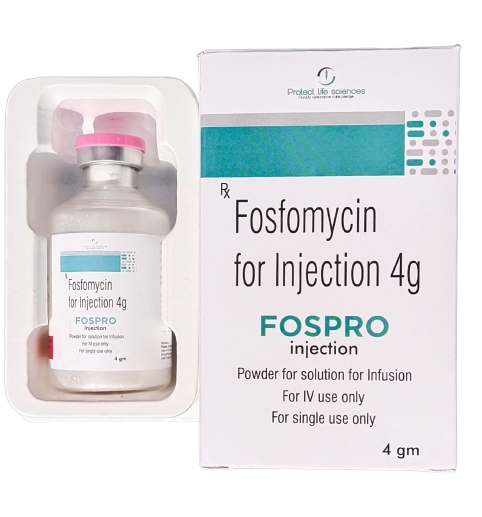 | FOSFOMYCIN 4GM INJECTION FOSPRO ₹4012 PRODUCT INTRODUCTION FOSPRO Injection is an antibiotic medicine used to treat bacterial infections in your body. |
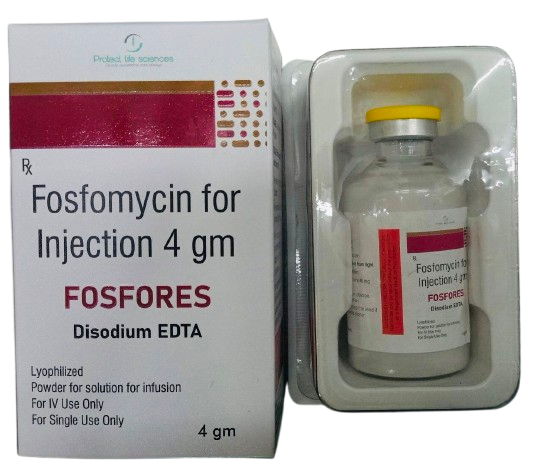 | FOSFOMYCIN EDTA INJECTION FOSFORES ₹4200 Important: How To Use This Information This is a summary and does NOT have all possible information about this product. |
Frequently asked questions
What should clinics compare in a Fospro injection comparison?
Compare fosfomycin sodium injection, any fosfomycin EDTA product, and oral fosfomycin separately. Check the active salt, dosage form, route, labelled fosfomycin amount, approved indications and clinical role before comparing price or dose.
How do dose and sodium load affect fosfomycin injection selection?
A 4 g vial does not establish interchangeability. Read the label for the fosfomycin active moiety, reconstitution volume, diluent, infusion time and sodium content, then calculate the patient’s total daily sodium exposure.
How should renal function guide fosfomycin injection use?
Review serum creatinine, estimated creatinine clearance and the product’s renal dosing instructions before ordering. Reassess renal function during treatment and involve an infectious-diseases or antimicrobial-stewardship team for severe or prolonged therapy.
When is another injectable antibiotic a better comparator?
Use an alternative injectable antibiotic as the comparator when its spectrum, infection-site evidence, susceptibility result, renal profile, sodium burden or administration requirements better match the patient and local guideline.
What documents should a clinic request from a fosfomycin injection supplier?
Request the current product label, certificate of analysis, batch number and expiry, storage and transport conditions, reconstitution and stability data, manufacturing or wholesale licence details, and pharmacovigilance contact information.